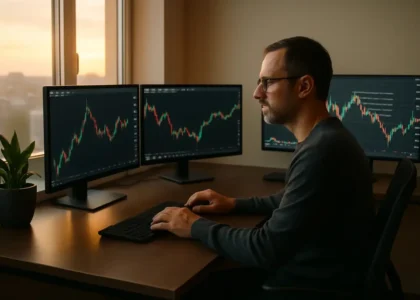

In the unpredictable world of trading, where fortunes can shift in an instance, every trader faces a storm at some point in their journey.
A drawdown can feel like being caught in a tempest, tossing you about with doubts and fears. Every trader, no matter their level of experience, will eventually face a drawdown. This is a period where you experience losses that outweigh the profits. It’s all part of the journey, but that doesn’t make it any easier.
Drawdowns test not only your strategy but also your mindset. The emotions that come with seeing your account dip can be overwhelming. You will face frustrations, doubts and even fear. These emotions can greatly interfere with your decision making process. In moments like these, it’s easy to feel like you’ve lost your way. But over time, I’ve found that staying grounded during these storms is key to getting back on track and turning the tide in my favor.
Here are some steps that I take when I find myself in a drawdown:
Reflecting on My Trading:
When I find myself facing a drawdown, one of the most crucial steps is taking a moment to reflect on my trading. This involves more than just reviewing my recent trades; it’s about gaining a deeper awareness of my overall approach. I ask myself important questions:
This process of reflection often reveals patterns that I might not notice in the heat of the moment. For example, I once realized that during drawdowns, I tended to overanalyze every market movement. This led to second-guessing my initial plans. By identifying this pattern, I could remind myself to trust my analysis and maintain my discipline.
Reflecting on my trading allows me to take a step back, ensuring I’m not just reacting to losses but actively learning from them. It transforms a challenging experience into an opportunity for growth which reinforces my commitment to becoming a better trader.
Revisiting My strategy:
The purpose of revisiting my strategy during a drawdown is simple but crucial: to ensure that I am applying the strategy as it was intended. It’s easy to assume that I am following my plan, but when losses accumulate, it’s important to step back and verify that I haven’t strayed off course when it comes to applying my strategy.
Having a strategy that is simple to follow and implement is key. The clearer and more straightforward the strategy, the easier it becomes to spot where I might be deviating from it.
I’ve learned that, sometimes, the cause of a drawdown is the subtle ways I’ve drifted away from my original approach. This can happen when I get caught up in the noise from the market. Because my strategy is concise, I can quickly identify where things went wrong. It might be my entry points, risk management, or even how I am reading the market.
By revisiting my strategy, I’m not just correcting errors but also realigning myself with the core principles that have worked for me in the past. This realignment is crucial to getting back on track and finding my way through the drawdown.
Following My Rules:
In trading, having pre-set conditions to guide my decisions have been a game-changer. I’ve developed a system where my decision making follows a simple formula: if this happens, then I’ll do this.
This guiding mechanism acts as a roadmap, ensuring I don’t stray from the rules I’ve set for myself. By having clear conditions, I eliminate a lot of guesswork that can lead to emotional or impulsive decisions.
For example, if a certain price level is reached or a pattern forms, I already know exactly how I’ll respond. This structure helps me stay disciplined, especially during the chaos of a drawdown. I no longer need to second-guess myself or react out of fear or frustration. Instead, my rules give me a sense of control, allowing me to approach each situation with clarity.
This method also helps prevent me from deviating from my plan. When I follow these preset conditions, I’m able to maintain consistency even when the market feels unpredictable. It’s this consistency that keeps me grounded and focused, allowing me to avoid unnecessary losses and work my way back to profitability.
Risk Management: Beyond the Stop-Loss
Risk management is often reduced to just setting a stop-loss, but for me, it’s much more than that. Effective risk management begins long before I enter a trade and continues well after the trade has closed. It’s about planning every aspect of a trade: knowing exactly when and how I’ll enter, and just as importantly, how I’ll exit. Without a solid plan for both, I’m leaving myself vulnerable to unnecessary risks.
Equally important is the emotional aspect of trading. Before placing a trade, I check in with myself: Am I calm and focused, or am I rushing into something out of frustration or excitement? During the trade, I stay mindful of my emotions. Am I sticking to my plan or am I reacting impulsively to market movements? And after the trade, whether it’s a win or a loss, I take time to assess how I handled it emotionally.
Managing risk isn’t just about protecting my account; it’s about protecting my mindset.
By planning my trades carefully and being aware of how my emotions affect my decisions, I’m able to stay grounded, even in volatile market conditions. This approach to risk management helps me navigate drawdowns with a clearer head and a more strategic outlook.
Patience and Discipline:
Patience and discipline are the most critical qualities, especially during a drawdown. Whenever things are not going as planned, it’s easy to lose your cool and let emotions run you. Feelings of missing out then reacting by rushing into trades to make up for losses often leads to even greater setbacks. I’ve learned that staying patient and waiting for the right opportunities is far more rewarding than trying to force trades out of frustration.
The ability to stick to my plan, no matter how tempting it may be to deviate is why discipline is important. This means following my strategy and respecting my risk management rules.
One of the best ways that I have found to cultivate these qualities is by practicing mindfulness. There have been times when I wanted to abandon my rules because of the fear of missing out or frustration from losses. Practicing mindfulness helps me stay grounded and become aware of my thinking and emotions. I remind myself that my success as a trader comes from following the system I’ve built, not from making hasty decisions.
Patience and discipline allow me to navigate tough times without losing sight of the bigger picture. Over time, I’ve realized that these two traits is what separates a steady trader from one who burns out chasing short-term gains.
Conclusion: Finding Balance Amid the Storm
Navigating drawdowns is never easy, but through self-reflection, revisiting my strategy, ensuring that I’m following my rules, managing risk and staying patient and disciplined, I’ve learned to stay balanced even when the markets test me. Drawdowns may shakes my confidence, but they’ve also taught me some of the most valuable lessons in my trading journey. It’s not about avoiding the storm, but learning how to sail through it with resilience.
If you have ever faced similar challenges, I hope my journey helps you find your own balance in the chaos. Trading is a constant learning process, and every setback offers the opportunity to grow. Stay focused, stay disciplined, and remember that even in the darkest moments, there’s always a path forward.
For more stories, insights, and lessons from my trading journey, be sure to check out my other posts. Let’s continue navigating the trading world together.