
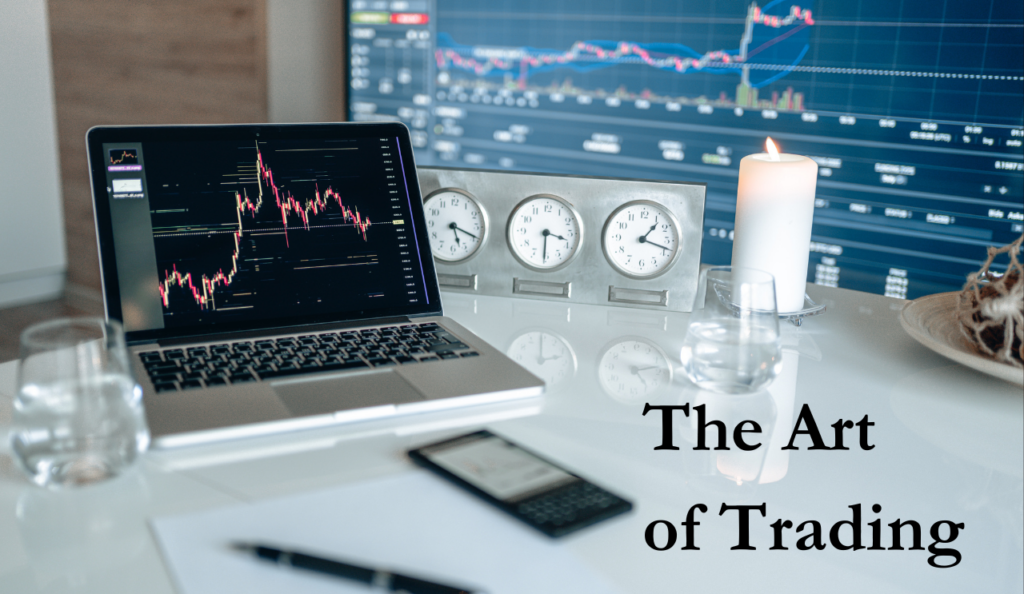
Trading, to the untrained eye, often appears as a straightforward endeavor- a simple matter of buy and selling. But the deeper I delved, the more I discovered that it is, in fact, a hidden form of art.
At first, this art is not visible; it remains masked by the noise of charts, numbers and market fluctuations. As a beginner, I couldn’t see the intricate details and subtleties that make trading an art, much like standing before a blank canvas or an unshaped block of clay.
It wasn’t until I began my journey that I realized trading requires the same patience, precision and creative insight that go into creating a masterpiece. Like a sculptor envisioning the shape within a raw block, I had to learn to carve away the noise, piece by piece, until a clearer picture emerged. My early days involved studying price action and testing out strategies with no guarantee of success- only the hope that, with each attempt, I was one step closer to uncovering the art that lay beneath.
In those early stages, the process felt uncertain, like chipping at something I couldn’t yet see. But I trusted that, just like an artist gradually brings their vision to life, my trading approach would eventually take form as I molded it through trial and refinement.
Step One: Finding the Foundation (The Initial Block)
It was after I had blown some accounts that I realized that I needed a foundation- something solid to start shaping. Much like a sculptor beginning with a rough block of clay. My initial foundation came from studying price action. I followed the guidance of a mentor I found on YouTube, eager to learn and find a structure in the chaos of the market. These early lessons became my starting point, the rough base that would eventually be carved into something meaningful.
Understanding price action was not that difficult. In this stage, the strategy wasn’t clear. It was undefined and unpolished, full of potential but lacking in form. I had to begin chipping away, experimenting with points of interest like demand and supply zones. It was a process of trial and error, where every attempt to carve out a pattern was a step toward giving shape to my strategy. If you are at this stage, your focus should be on the process and not making money.
But, as with any work of art, the process was slow. Each adjustment seemed small at first, but these initial efforts were vital. They marked the beginning of turning an abstract idea into something tangible. I had to trust that even though the shape wasn’t visible yet, these early steps were laying the groundwork for what would come later.
Step Two: Refining the Details (Carving the Shape)
As I moved further into my trading journey, the initial block began to take shape, but it was still far from complete. This phase was less about broad strokes and more about the intricate details. I had to hone in on my strategy, testing different entry methods and fine-tuning my understanding of the market dynamics.
This was a time of discovery, where every test brought new insight. I explored various entry and exit strategies, learning to recognize patterns and price movements that aligned with my evolving approach. Some days brought clarity and success, while others felt like setbacks- moments where my efforts seemed to obscure rather than reveal the intended shape.
Yet, I understood that each experience, whether positive or negative, contributed to the final product. It was about refining my approach and removing the excess; the mistakes and misjudgments that weighed down my strategy. As I continued to carve, I realized the importance of patience and resilience when it comes to trading.
Every adjustment taught me that creating a successful trading strategy requires the willingness to embrace the process, even when the outcome isn’t immediately clear.
Step Three: Defining the Form (Fine-Tuning the Strategy)
As I continued refining my approach, I began to experience breakthroughs that helped define the shape of my trading strategy. After spending a significant amount of time testing, I discovered the entry methods that resonated with my style. Each successful trade was a testament to the meticulous process I had undergone;an affirmation that my efforts were starting to pay off.
Creating a well-rounded strategy involved more than just perfecting my entries; my exits had to be on point as well. I had to learn the art of knowing when to exit a trade. This meant developing a clear criteria for when to take profits or cut losses, ensuring that my strategy was not only about entering the market but also about managing my positions effectively.
I learned to balance my instincts with a disciplined approach, carefully sculpting my exits to complement my entries. Each adjustment was a crucial part of the process, adding depth and clarity to my overall strategy.
Finally, I had a strategy that felt more cohesive- one that truly reflected my trading style and approach. I had carved away the excess, shaping a clear path forward that incorporated both entry and exit strategies, allowing me to navigate the markets with confidence.
Step Four: Embracing Adaptability
As I continue shaping my trading strategy, I realize that the final touches are not just about refining what I have but also embracing the idea of adaptability. Each day brings new information and trends, and I know that to thrive, I must remain open to adjusting my strategy as the conditions evolve.
This ongoing process means committing to continuous learning. I find myself analyzing the market movements, staying updated on economic events and reflecting on my past trades. I’m learning that my strategy isn’t fixed; it’s a living entity that requires attention and evolution. By regularly revisiting my approach, I can identify what works and what might need refinement.
Currently, I am discovering the balance between trusting my instincts and adhering to the principles I’ve developed. It feels like a dance, where I’m learning to blend my structured methods with the fluid nature of the market. I recognize that this journey will never truly be complete; there’s always room for improvement and growth.
Embracing adaptability helps me navigate the challenges and fluctuations of trading with greater resilience. Instead of seeing obstacles as setbacks, I view them as opportunities to grow and refine my strategy further.
Just like a sculptor who remains open to inspiration, I strive to shape my approach continuously, reflecting my evolving understanding of the market and my personal growth as a trader.
Final Word: The Ongoing Journey of Creation
As I reflect on my journey of developing a trading strategy, I see it as an ongoing masterpiece in progress. Each phase of molding, refining and adapting is a testament to my commitment to grow as a trader. Just like an artist, I understand that my work will never be truly finished; there will always be new techniques to learn and fresh perspectives to explore.
I invite you to join me on this journey as I continue to share my experiences and insights. Each article I write captures another layer of my growth and understanding in the trading world. Whether you are just starting out or looking to deepen your knowledge, I hope my stories and lessons resonate with you.
Thank you for taking the time to read about my process. I look forward to connecting with you through my future articles, where we can navigate the exciting landscape of trading together.