
Imagine being so at ease when trading that nothing really shakes you anymore. You are not interested in any trades that don’t align with your framework. Waiting no longer creates agony, because it is now part of your trading routine. Fear no longer holds you back. Your decision making process is so clear, that market noise no longer moves you. This is what developing emotional discipline in trading does for you. It transforms you into the trader capable of achieving the success that you dream of.
So how do you get there? How do you develop emotional discipline in trading?
Emotional discipline in trading is something you build. Like a muscle, it grows stronger through deliberate practice, repeated exposure to stress, and conscious reflection on your behavior in the market. It’s not about feeling nothing — it’s about not being ruled by what you feel.
Here’s how to cultivate it:
You can’t have emotional discipline if you are not sure about what you’re supposed to be doing. A clear, tested, and rule-based strategy is the foundation. When you know what setups you’re looking for, what invalidates a trade, and what confirms one, you eliminate guesswork; and guesswork is what fuels anxiety and impulsiveness. Consistency is built through a clear system and mastering emotional discipline.
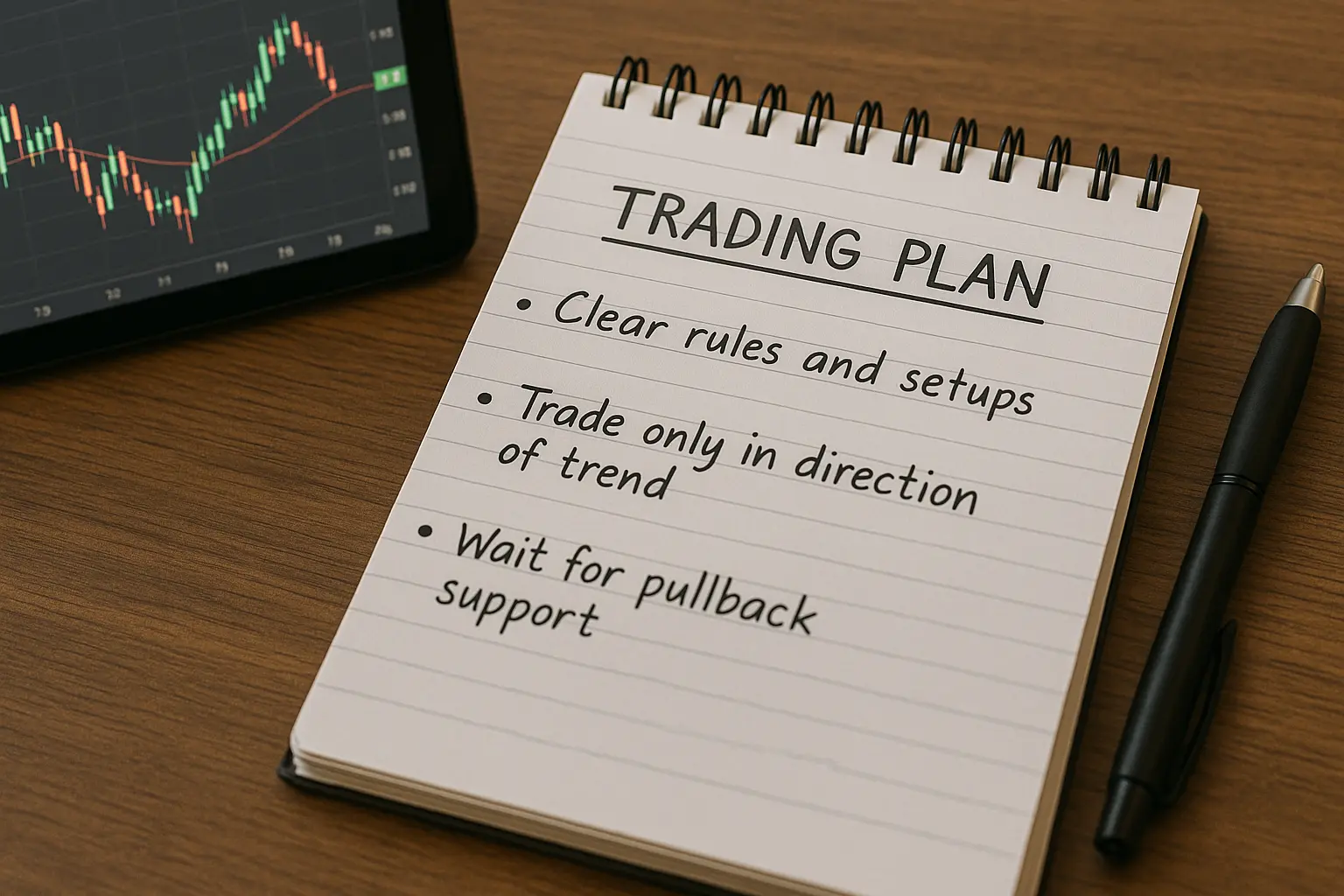
Traders who are emotionally disciplined don’t chase every move — they wait for their move. That means letting go of the need to be in the market all the time. It means saying no to a dozen setups, so you can say a clear yes to the one that aligns.
You stop feeling FOMO when you realize that missing a trade isn’t a loss but a win if it didn’t meet your criteria.
Fear doesn’t disappear, you just stop giving it power. Before you enter a trade, ask yourself: Am I at peace with the potential outcome? If not, walk away. If yes, then let the trade unfold. You’ve done your part. Emotional discipline means not trying to control what’s uncontrollable — only what is.
This is where growth happens. Not during the trade — but after. A journal keeps you honest. It shows you where you hesitated, where you rushed, where you ignored your own plan. Reviewing your trades with honesty builds emotional resilience. You stop taking losses personally, and you start seeing them as feedback.
Discipline deepens with self-awareness.
Most traders lose money not because they lack strategy, but because they hate to wait. They want action. Emotional discipline teaches you to honor the quiet moments. To treat patience as part of your edge. Build habits around your waiting periods e.g. review notes, study past trades, meditate, step away. Over time, the agony of waiting turns into peace.
You are not your last trade. You are not your P&L. Emotional discipline grows when you stop letting wins inflate your ego and losses deflate your confidence. Success in trading isn’t built on always being right. It’s built on always being aligned with your process.
You’re not here to be perfect. You’re here to be consistent.
Emotional discipline isn’t a final destination. It’s a state you return to, again and again, no matter what the market throws at you. Some days it’s easier. Other days you’ll slip. That’s okay. What matters is that you keep coming back to the centered, focused, and grounded trader you’re becoming.
Because when you build that kind of discipline, the market stops shaking you. And that’s when everything changes.